
At a Glance:
Location: Manuel Antonio, Pacific Coast, Costa Rica
Entity: Arenas Del Mar Beachfront & Rainforest Resort (11-acre private nature reserve)
Systemic Problem: Scope-3 emissions, supply chain vulnerability, and high regional plastic waste generation (46kg per capita)
The Response: In-house “kilometer zero” Drinks Laboratory producing carbonated water, craft beers, juices, and zero-waste glass bottling
“Buenos!”
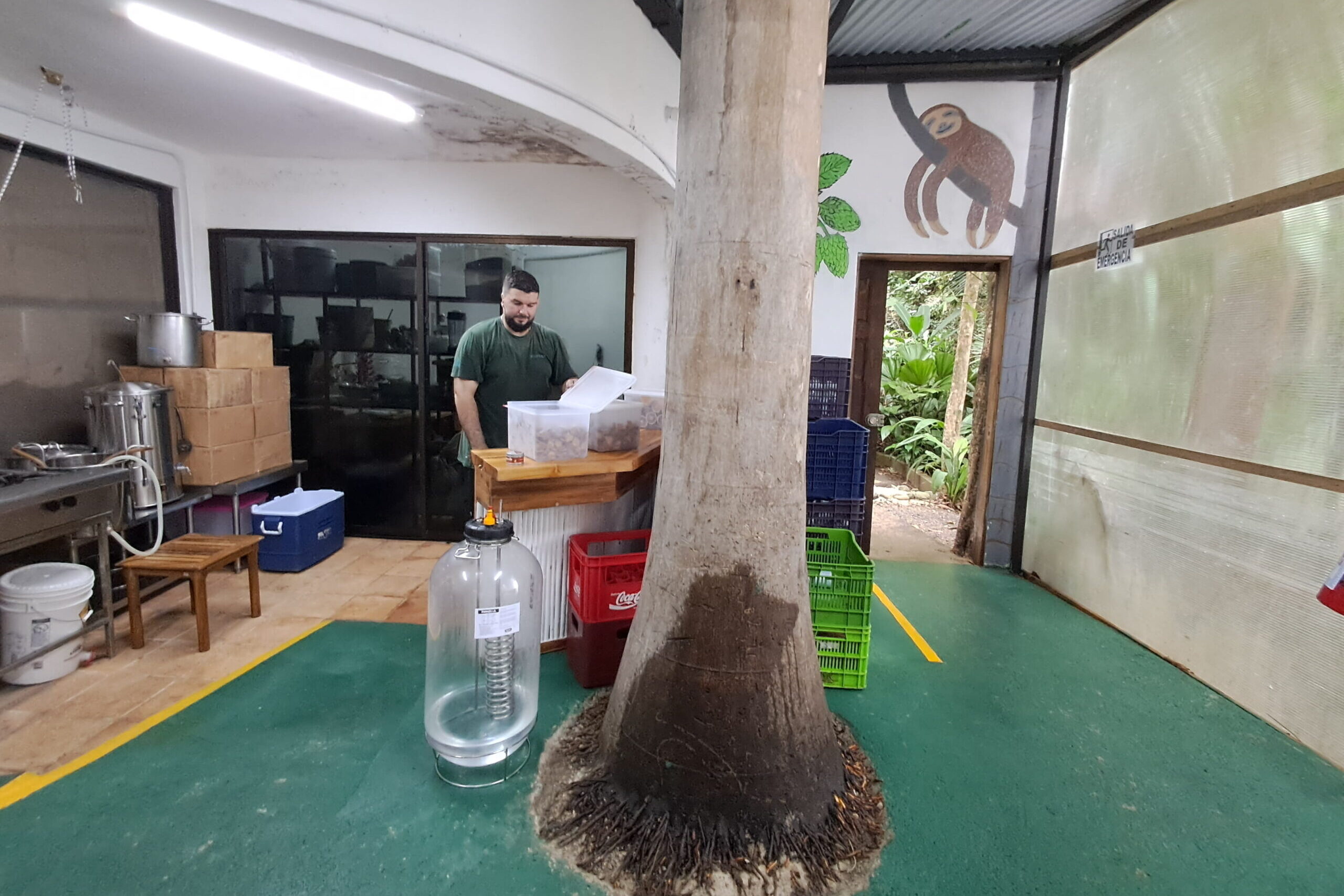
Greetings welcome us as we step out of the humid, mid-morning jungle air into a small building set alongside staff housing. I’m walking the back-of-house operations of Arenas Del Mar with experience and sustainability manager Paula Marín Montero, who is practically humming with enthusiasm as she welcomes me to the Drinks Laboratory at Arenas Del Mar – an 11-acre resort fringing Costa Rica’s Manuel Antonio National Park. Less than five years ago, this didn’t even exist, but what began as a response to supply chain struggles and high import costs has evolved into a fully localized, “kilometer zero” food and beverage production engine. “We have all three aspects of sustainability here,” she says, gesturing around the space. “Economic, environmental, and social.”
The Drinks Laboratory is aptly named: Master brewer Jorge Benavides stands at a four-burner gas stove, a hoppy vapor wafting from the oversized pot he’s stirring. A line of juicing machines lines one wall. Crates of glass bottles are heaped at the lab’s entrance, which is adorned by a hand-painted three-toed sloth draped over the door. A large, empty carboy sits next to a royal palm tree, around which the Laboratory has been built.
In other places, the tree might seem out of place, but not here. Visitors are attracted to Arenas Del Mar’s beachfront location, but the resort’s environmentally centered operations and positioning are obvious across the property. It teems with conservation initiatives and waste reduction strategies from guest services to housekeeping, which guests can learn about on a free behind-the-scenes sustainability tour. Set within a private nature reserve, Arenas Del Mar was designed with a minimal physical footprint, including building around trees and other natural features.
Yet, despite (or perhaps because of) this eye toward sustainability, it took an employee innovation challenge in 2022 to highlight how reliant the resort was on external suppliers for bottled water – and how much plastic waste it was creating in the process. This was an important realization for the resort, but it also has national implications. Costa Rica is considered a leader in conservation and environmental protection and has committed to eliminating plastic pollution via its National Plastics Action Roadmap. Yet, the country generated an average of 46 kilograms of plastic waste per person in 2022, and one study found the country is among the four most plastic-polluted countries on the Pacific Coast.
“Here we work first and foremost with water. We have water with gas and without gas,” Benavides says, pointing to the row of carbonation machines as Montero translates our conversation. They look innocuous enough, but these machines catapulted Arenas Del Mar into an era of cost savings and self-reliance. “Our food and beverage manager realized how much money we were putting into buying water from our suppliers,” Montero says. “So, he found out about these machines that gasify water and said, why don’t we start bottling our own water?”
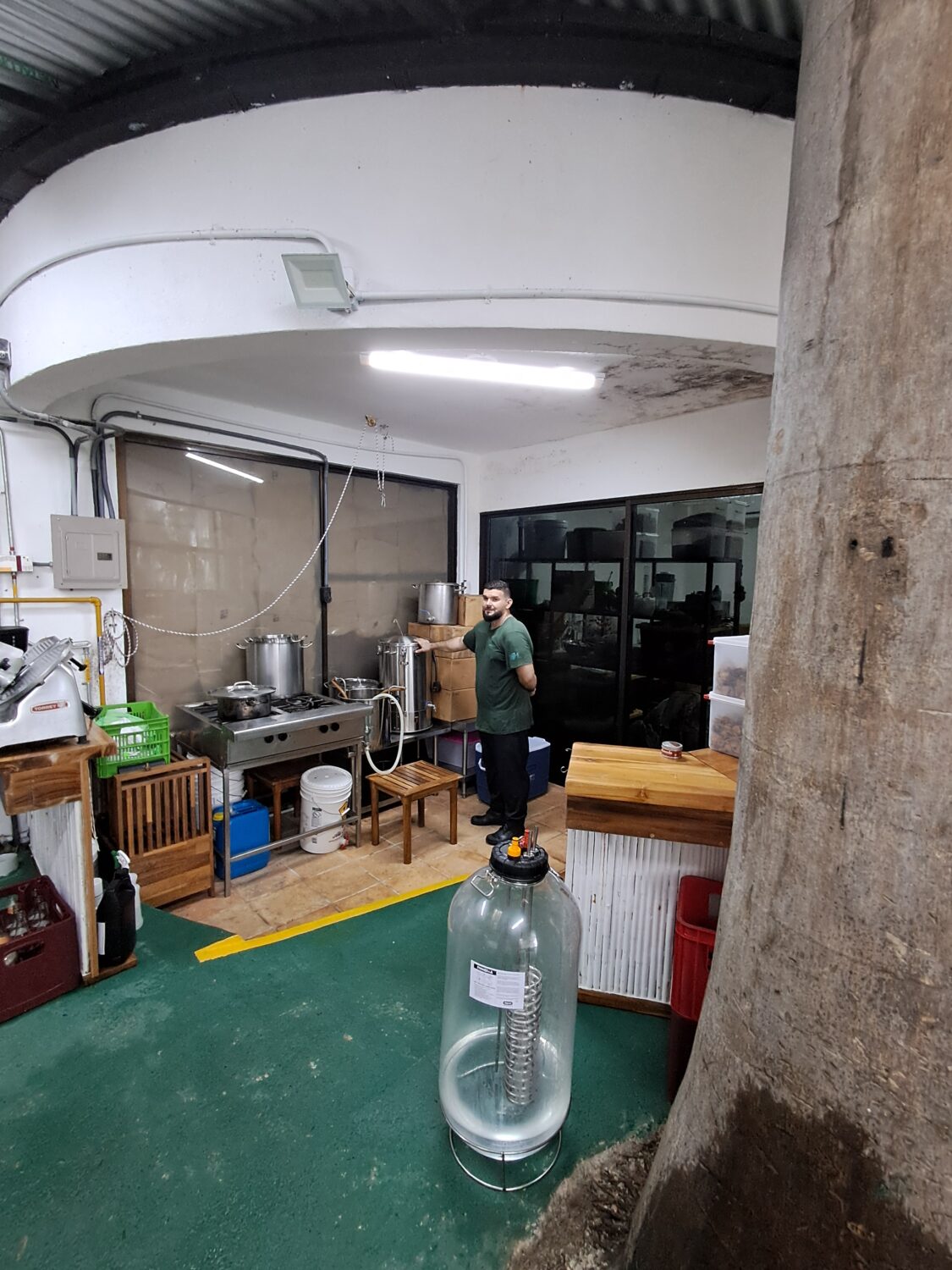
Jorge Benavides is one of two employees who works full-time in the Drinks Laboratory. | Photo: JoAnna Haugen
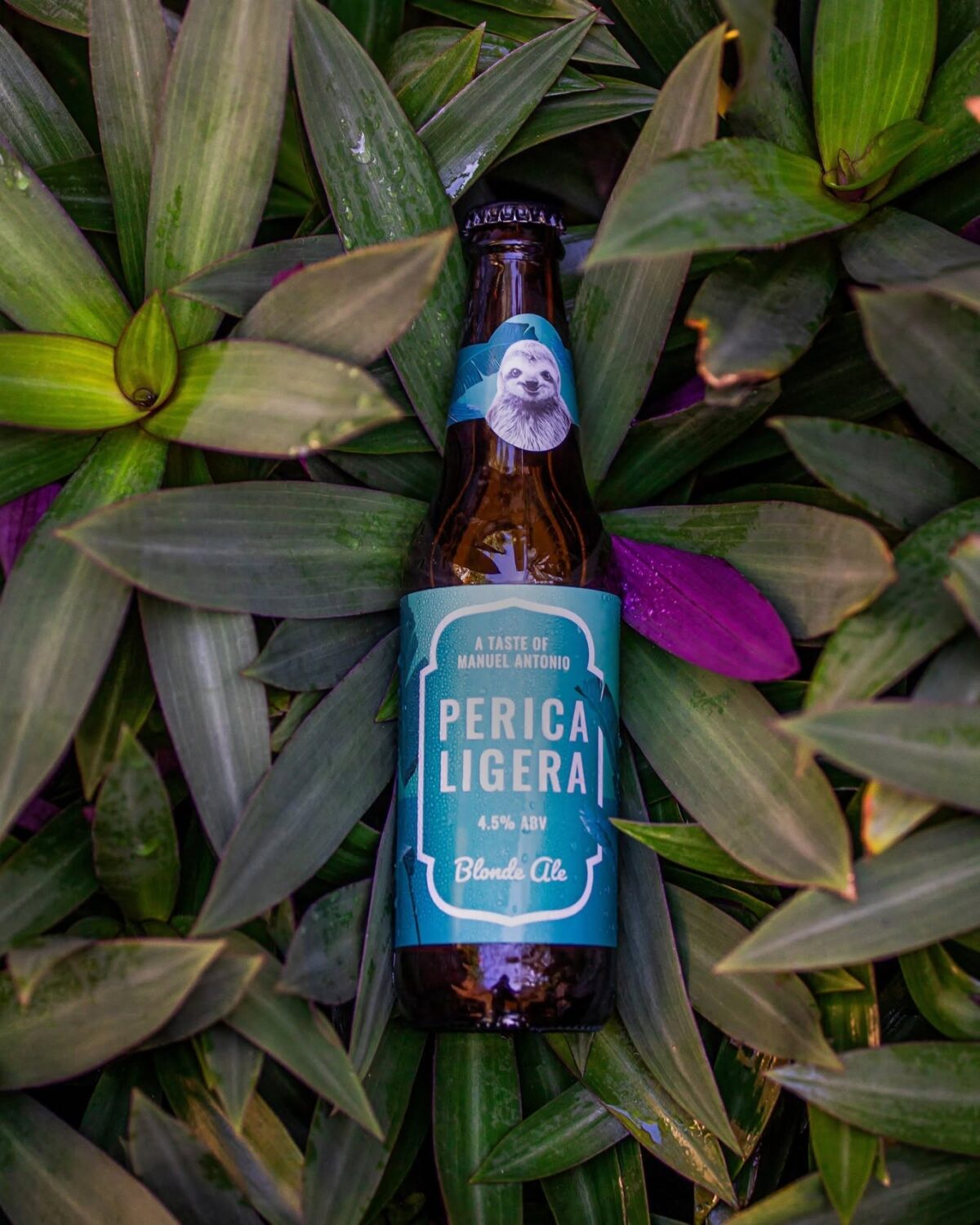
In addition to flavored carbonated water and juices, the Drinks Laboratory now produces its own beer. | Photo: Arenas Del Mar
Around the same time as this innovation contest, the Costa Rican company that supplied the property’s sparkling water stopped its services. Importing would have required switching to an Italian supplier. “We had to find another way,” said Alejandro Narváez, Arenas Del Mar’s former food and beverages manager, and the creative mind behind the Drinks Laboratory. “That’s why we found these machines and started doing this.”
In 2019, before bottling still water in-house, Arenas Del Mar purchased around 10,300 bottles from an external supplier for ₡9.1 million (US$29,000) before VAT. The water carbonation machine cost about ₡1 million (US$2,200), and, with potable water readily available, the investment quickly paid itself back and was reinvested in more machines. Based on current Drinks Laboratory production, this has resulted in an estimated annual savings of ₡7 million to ₡8 million (US$15,400 to US$17,600). (Because the supplier figures are from 2019, it is reasonable to assume the current financial benefit may actually be greater, according to general manager Johan Hassard.)
Shortly after the food and beverage team began bottling the resort’s still water, it inventoried all beverages served on the property to spot other cost-saving opportunities. Going all in on its potential, Arenas Del Mar transferred Benavides and another employee, both working in the kitchen, to the Laboratory full time. The company then invested in their training to become master brewers.
Today, the resort sells approximately 300 bottles of its flavored sparkling water per month for about US$18,000 in gross sales annually. The Drinks Laboratory team also makes all the resort’s juices (passion fruit, Jamaican flower, and other flavors) and brews its own beer 60 liters at a time. “They’re working on their own personalized beer recipes,” Montero says, as well as non-alcoholic options and ginger beer.
By moving bottling in-house, Arenas Del Mar was also able to switch from using plastic bottles to glass, keeping approximately 20,000 single-use plastic bottles out of the landfill every year. The bottles used by the Drinks Laboratory are washed, sanitized, and reused repeatedly, and labels are reused up to five times before being replaced. With the exception of plastic tops available for bottles that need to be recapped (such as when guests visit nearby Manuel Antonio National Park), Arenas Del Mar has also replaced plastic caps with metal ones, thereby making its plastic-reduction goals more feasible.
“This is the story of the Drinks Laboratory,” Montero says. “These are all places where we can stop buying from our suppliers, and we can do all of this here. This is kilometer zero.”
For sustainably minded companies, the supply chain is often where good intentions come unraveled. Had Arenas Del Mar continued to import its water, both its costs and carbon emissions would have increased. “While we have not calculated a verified carbon reduction for transportation, reducing packaging and unnecessary imports is an important part of the initiative,” Hassard said. Sourcing ingredients from local suppliers and adjusting ingredients based on availability while producing the final products in-house makes it possible to reduce uncertainty and navigate market volatility. Nonetheless, Narváez noted Arenas Del Mar’s remote location still presents a challenge at times. “We are only three-and-a-half hours away from San José, but the logistics to get the ingredients is kind of difficult. What we need must be fresh and high quality,” he said.
The property’s location also makes it difficult to find people willing to offer ongoing training for the Drink Laboratory’s employees on-site and in context with the equipment they have available. “Everybody wants to do it online, but online for us is just okay,” Narváez said. “We like to go out, but we want the people here so they can see what we have and how we make things.”
Beyond Arenas Del Mar’s physical location on the western coast of Costa Rica, the building the Drinks Laboratory is currently housed in also presents a problem. The support for and success of the Drinks Laboratory means innovation continues to flourish. It now works with raw milk to produce kefir, cream cheese, sour cream, and yogurt. It even dabbles in simple snacks – a mix of seeds and dehydrated plantains, pineapple, and oranges – which I happily sample when Benavides offers the goodies to me in a small reusable container. Yet, as Narváez noted, there is a need to move the Laboratory to a larger place. Food production and prep are starting to encroach on the beverage space, but there are building and development constraints within the resort’s environmental footprint.
As the Drinks Laboratory continues to experiment and expand, it also continues to inspire. “We recognize that this type of program is not unique to Arenas Del Mar, and we are encouraged that other sustainability-focused hotels have developed similar approaches,” Hassard said. The concept is evolving and shared within the Cayuga Collection, the hotel portfolio in which Arenas Del Mar belongs. Narváez, who is no longer with Arenas Del Mar, is also helping to replicate it at his new place of employment, Arenal Observatory Lodge.
We step back outside into the steamy air, and Montero leads the way down the footpath to the next operational stop. Back in my room later that day, pouring water from one of the lab’s freshly capped glass bottles, the operational loop becomes tangible. There’s something particularly lovely knowing the water didn’t travel from San José or Italy – that the Drinks Laboratory right down the footpath, built around an oversized royal palm tree, is keeping me hydrated instead.
Note: The author was a guest of Arenas Del Mar, but all opinions and content are her own.