At a Glance:
Location: Kirtipur, Kathmandu Valley, Nepal
Entity: Kirtipur Newar community experience leaders in partnership with Community Homestay Network (CHN)
Systemic Problem: The decline of the 900-year-old Ranjana Lipi script amidst pressures of globalization and digitization, paired with mainstream tourism’s tendency to commodify cultural heritage into superficial, mass-produced souvenirs
The Response: A community-led, 3-hour interactive script-writing workshop that teaches foundational strokes of Ranjana Lipi, generates revenue for social welfare programs, and encourages local youth interest in safeguarding cultural heritage
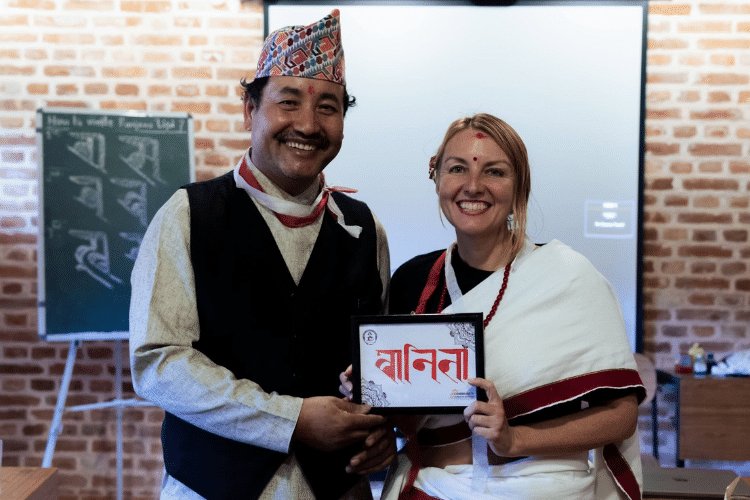
Stepping into the classroom-sized room, my fellow travelers and I were invited to take a seat at one of the tables, set for our arrival. Grid paper, cups of black ink, and bamboo writing utensils with a flat tip waited at each spot. I nabbed a chair with a good view of the easel at the front of the room. But it wasn’t just the fact I’m a people-pleasing student that my attention was on high alert: I’m an avid hand writer and couldn’t wait to spend the next three hours in Kirtipur, a Nepalese village southwest of Kathmandu, learning to write in Ranjana Lipi, one ink dip and slashed line at a time.
In an era of text messages and digital shorthand, it’s easy to forget that handwritten script was the keeper of history not so long ago. Yet, with each passing day, writing by hand moves further into the past and, with it, the stories encoded within it. The Ranjana Lipi script is approximately 900 years old. A variation of Nepal Lipi (or Nepal script), it is used to write Nepal Bhasa and Sanskrit, including the Buddhist mantra “om mane padme hum” on prayer wheels, in mandalas, and across temple walls. It is deeply embedded within the tradition-based culture of the Newar people, yet it requires active effort and interest to maintain its relevancy amidst pressures of globalization and digitization. “While I am a Ranjana Lipi facilitator, I also feel like a protector and revitalization advocate for this endangered cultural script,” said Pradeep Maharjan, one of the workshop’s educators, known as experience leaders.
According to Booking.com’s 2026 travel and sustainability research, travelers are increasingly seeking out more interactive and culturally enriching activities. Nearly one-third of Gen Z (31%) and 29% of Millennials say they participated in tours or activities where they learned about or interacted with local Indigenous people or cultures in the past year. This demand aligns with a growing movement to preserve cultural heritage in communities like Kirtipur. Since its launch, the script-writing activity has fueled interest in Ranjana Lipi within the wider community (particularly youth), strengthened community pride, and helped fund social welfare programs.
Inspired by the casual “paint-and-sip” model, the hyper-local Ranjana Lipi workshop blends social connection with cultural learning. Local experience leaders explain the historical significance of the script while teaching foundational strokes of key characters. Community Homestay Network (CHN), which serves as a liaison between local Nepalese communities and travelers interested in community-based tourism, conceived of and approached the Newar community with the idea. “At first, they were really shocked, because they had never thought of connecting their culture – their heritage – to a commercial event, so it was a bit confusing for them,” said Pushpa Thapa, CHN’s product development lead.
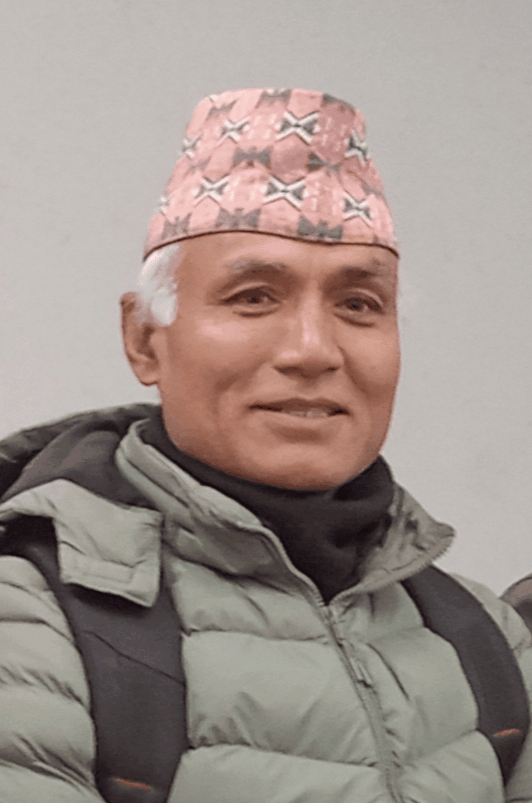
"While I am a Ranjana Lipi facilitator, I also feel like a protector and revitalization advocate for this endangered cultural script." - Pradeep Maharjan, Ranjana Lipi experience leader | Photo: Pradeep Maharjan
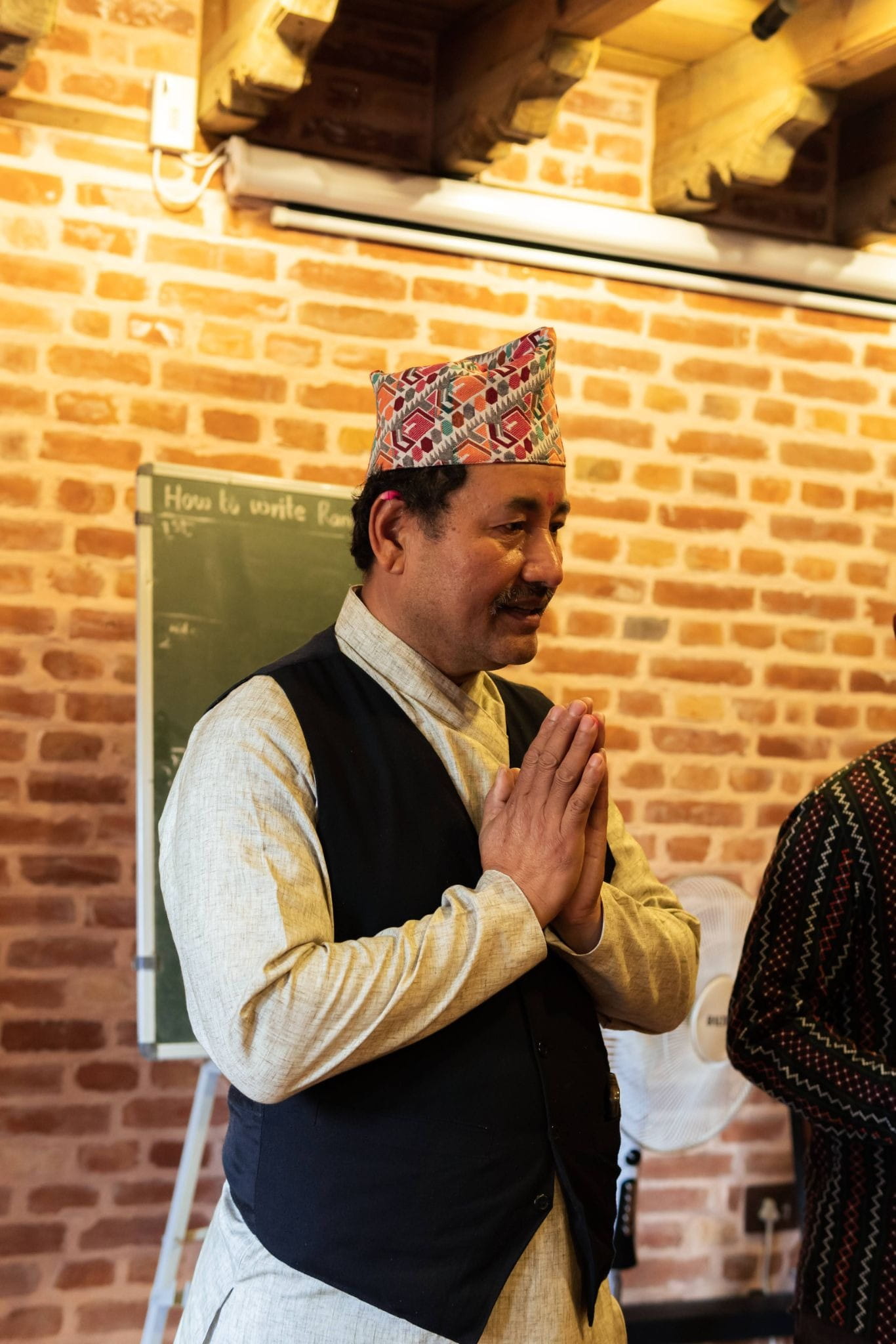
"I have taken this opportunity to take our native script and the safeguarding of our culture to an international level." - Gyan Bahadur Maharjan, Ranjana Lipi experience leader | Photo: Gyan Bahadur Maharjan
Kirtipur has an active homestay program, and a three-hour experience naturally aligns with the kinds of activities CHN’s typical traveler seeks, yet there was skepticism. “One of the experience leaders still recalls his dilemma when we first pitched this idea to him. He said that he couldn’t sleep for days because he had to think of how to adjust this learning process to just two or three hours,” Thapa said.
This initial hesitation points to a recurring tension in cultural tourism: the fear that compressing centuries of heritage into a short visitor activity will reduce sacred traditions to cheap, commodified souvenirs. Introducing Ranjana Lipi with dignity while keeping the experience engaging for outsiders required careful, intentional collaboration.
Over the course of several months, experience leaders and CHN staff worked together to design the workshop, which pairs script instruction with a traditional Newari greeting, beverages, and snacks. “They came up with the ideas from their past experiences on how it could be done, and they were the ones who suggested which of the basic words could not be missed during the teaching process,” Thapa said. Held 65 times since its inception (approximately three times a month during peak season), the experience hosts up to 15 people at a time. It is facilitated in basic English – something experience leaders acknowledge they want training in – using key words and phrases in Nepal Bhasa relevant to the script used throughout.
The community set boundaries around the workshop based on its own rules, values, and collective agreement regarding any cultural practices that are inappropriate to share with outsiders. To offer a tangible connection, CHN suggested guests leave with a personalized keepsake: a single word chosen by the traveler and handwritten in Ranjana Lipi by an experience leader. By adapting the activity with abbreviated context, key foundational strokes, and other cultural touches specific to the local area, travelers are able to get a genuine feel for the local heritage as well as a culturally immersive experience.
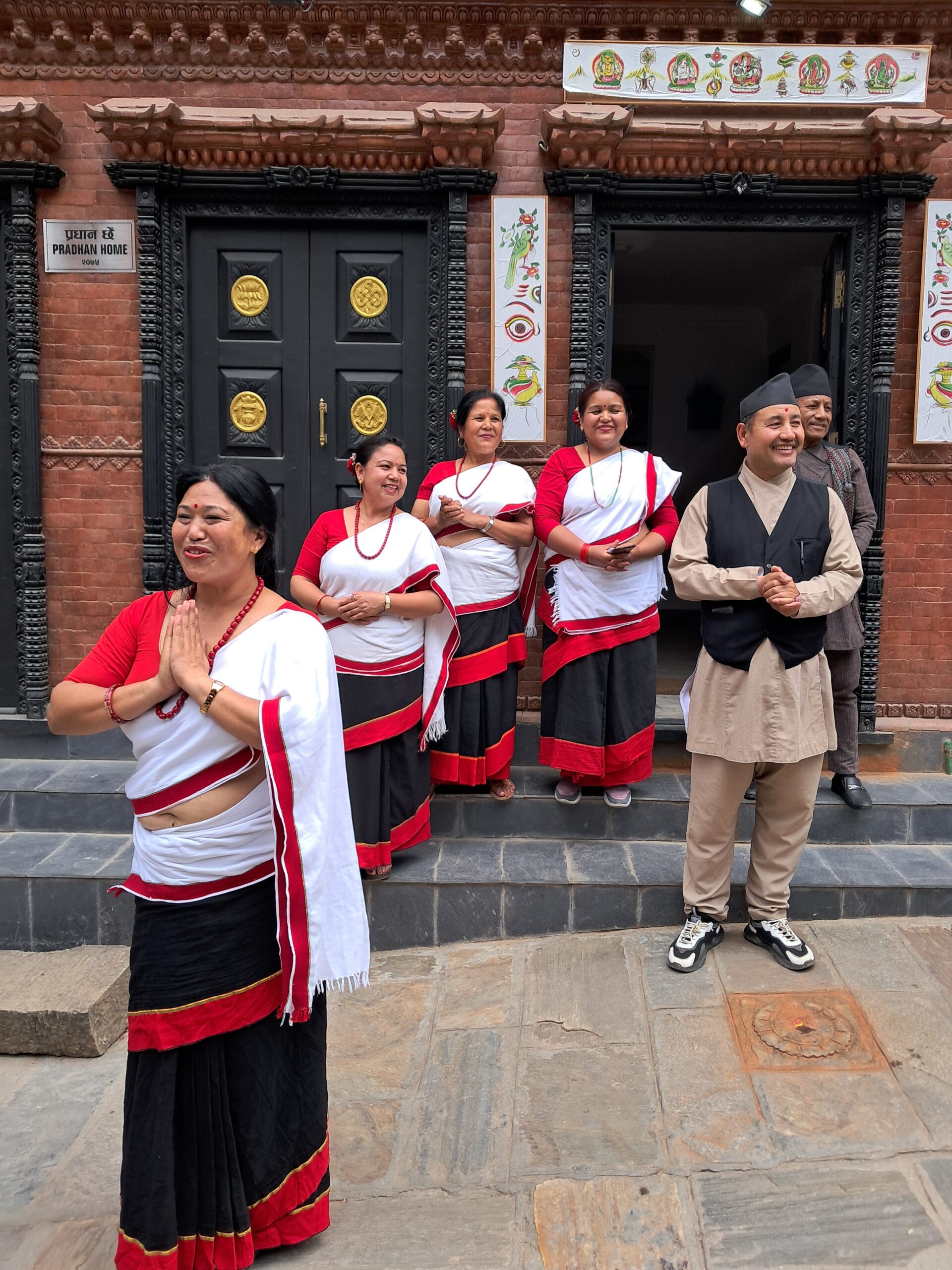
Ten percent of revenue from the Ranjana Lipi workshops directly benefit the wider Kirtipur community. | Photo: JoAnna Haugen
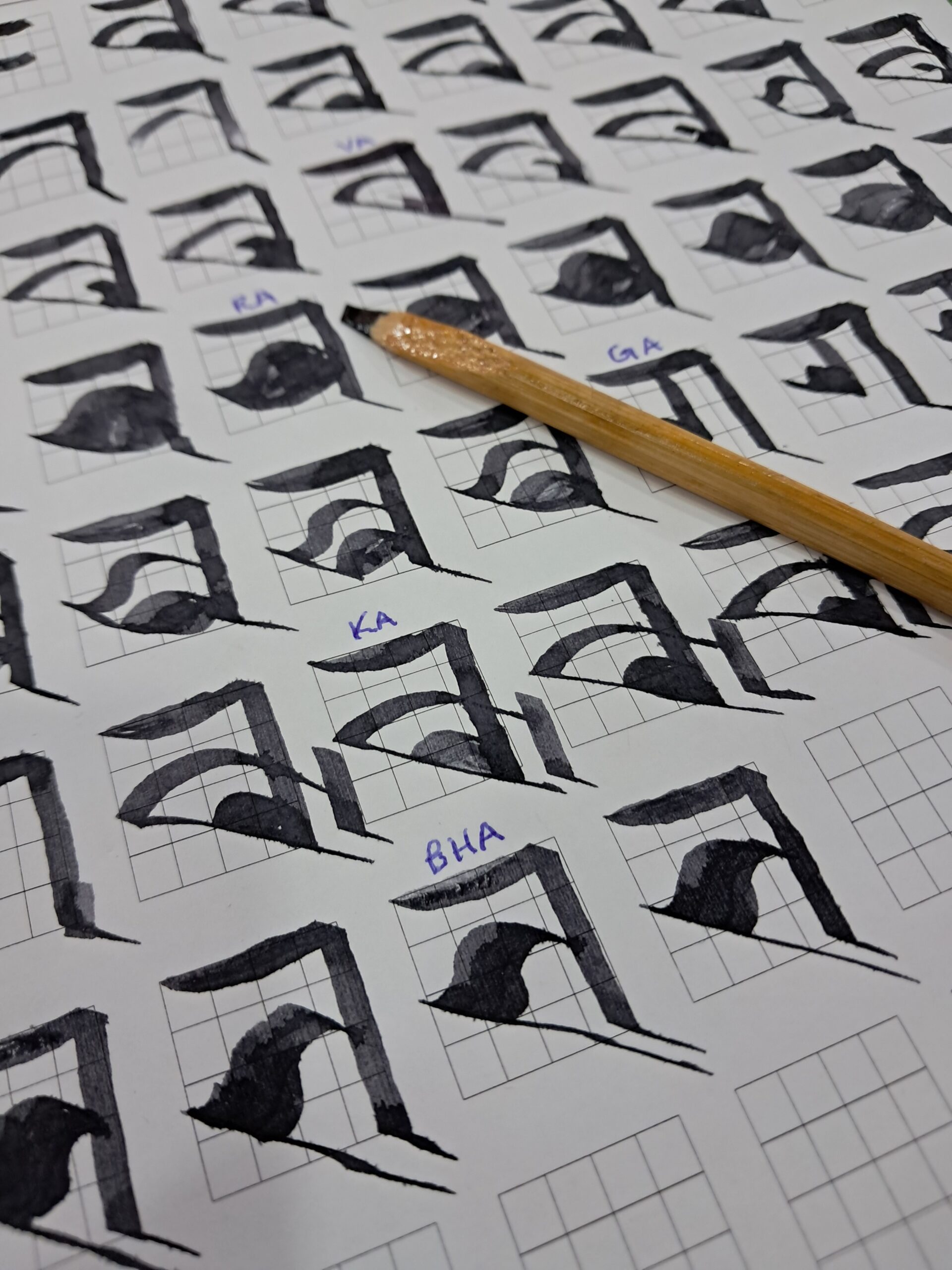
During the workshop, experience leaders teach the foundational strokes of Ranjana Lipi while providing cultural and historical context. | Photo: JoAnna Haugen
While CHN recognized the opportunity, served as the catalyst for the workshop, and helped local residents design it, the organization stepped back after six months, offering its platform for booking but leaving the interactive activity in the hands of the community. Four years on, the experience leaders have introduced nearly 250 travelers to the Ranjana Lipi script. “I have taken this opportunity to take our native script and the safeguarding of our culture to an international level,” said experience leader Gyan Bahadur Maharjan. “I feel this is also an opportunity to promote the country itself.”
Tourists aren’t the only beneficiaries, though. Since launching the workshop, there has been increased interest in the script within the community. Facilitators have organized two workshops for local community members with almost 40 participants each ranging in age from 16 to 60. Additionally, they’ve organized and contributed to Ranjana Lipi sessions during street festivals and cultural events, introducing youth, in particular, to the script. “When teaching this script, it is not just limited to teaching. I feel like I am learning its life and giving life to the script,” Pradeep Maharjan said. “While teaching it to foreign guests, I feel that the script is becoming more international, and, with youths, I can sense their increasing interest in the culture.”
The experience leaders are also playing a role in designing Google Translate features for the translation of Nepal Bhasa, which was recently announced as a working language by the Bagmati Provincial Government. Beyond supporting the preservation of the Ranjana Lipi script, the economic impact of this tourist experience has been significant. The workshop runs on a demand-and-supply model, with experience leaders treating it as their primary income source. After covering basic supply costs, 90% of the revenue goes directly to the facilitators. The remaining 10% supports the Kirtipur Community Homestay, which helps fund social welfare initiatives like local cleanliness campaigns.
As a lover of hand-written script, I felt right at home studying and copying the Ranjana Lipi characters – the parallel tails on the bottom right corner of Bha, the filled-in corner of Ka – as the experience leaders moved between tables to offer feedback. I left with my grid paper and the word “always” written for me in dark ink. But while the physical takeaway is nice, the true significance of the workshop lies in its design. By allowing the Newar community to define its own boundaries, set the curriculum, and retain operational control, the Kirtipur workshop demonstrates how tourism can serve as a meaningful engine for cultural preservation – funding local welfare and reigniting youth interest in cultural heritage on the community’s own terms.
Note: The author was a guest of Community Homestay Network, but all opinions and content are her own.