

This article was originally published in October 2021. It has been extensively rewritten and republished to reflect the present day.
During a week-long trip in Nepal, I stayed with two families in two communities. One homestay was in Nagarkot, a rural village with 150 people, where my host plucked veggies from a terraced garden and milked the family’s cow to prepare for the nightly meal. My room was simple, the electricity sparsely used, and the kitchen small enough that a fellow traveler and I had to eat dinner on an outside terrace.
The other homestay was located in Panauti, a community with 28,000 people. My host’s home, located on a cul-du-sac of a paved road, had a gate with a car parked out front. Our host’s 25-year-old son gave us a tour of the city’s winding maze of streets lined with temples, public gathering spaces, and small businesses. In the evening, we ate with our host family in their roomy kitchen/dining area.
Both women I stayed with were friendly, generous hosts. Both had unique histories and stories that brought them to this moment in which they were hosting travelers in the spare rooms of their homes. Both women’s homes and lives were representative of reality for the people living in their respective communities. Both travel experiences were distinctly different from each other and memorable for their own reasons.
And yet, some of my fellow travelers perceived our visit to Nagarkot to be more “authentic” than the one in Panauti. Why is that?
As a long-term resident living in a country other than where I was born or have citizenship, I think about the idea of authenticity a lot. When someone visits my current home country of Romania, an “authentic” travel experience likely includes time in the traditional old town of any of the cities, where cobblestone streets lead past centuries-old churches and castles. Romania is home to many folk tales, so it’s common for visitors to chase their origins into the mountains, where Vlad the Impaler (Dracula) lived. And no trip to Romania would be complete without standing in line for mici, a traditional, popular meat roll served hot off the grill.
But what about the crowded big-box store packed on Saturday morning when people stock up on toilet paper and groceries for the week? Or the café down the street serving butter croissants and coffee virtually indistinguishable from those being served in the café next door? These places are a genuine part of daily life for me and my neighbors, so does that make them authentic too?
The answers to these questions matter because they directly impact how we package, market, and deliver the desirable quality of authenticity in tourism.
Why Authentic Travel is Popular and Important for the Tourism Industry
Popular sites are popular for a reason, but more intrepid travelers have always been encouraged to venture beyond these places. For example, Rick Steves’ brand, Europe Through the Back Door, always platformed local businesses and alternative ways to visit popular attractions.
In recent years, the desire to deviate from the tried-and-true travel itinerary has caught on. Aligned with the mainstream conscious consumerism movement, people are increasingly aware of their impact when they travel and are making more mindful decisions as a result. According to Booking.com’s 2025 research on consumer attitudes and intentions, 73% of respondents say they want the money they spend to go back to the local community. More than three-quarters (77%) seek authentic experiences representative of local culture. Additionally, searches for under-the-radar destinations have increased by more than 60% year-over-year, according to Expedia’s Unpack ‘25 report, indicating an active intention to move beyond the most popular destinations.
These shifts impact the wider tourism ecosystem. Responding to evolving traveler interests, tour operators create itineraries incorporating more culturally relevant experiences and local businesses. Community-centric operations like homestays have grown exponentially in recent years. Tourism companies tout small group sizes, using public transportation, and interactive activities as selling points.
Fortunately for the tourism industry, the popularity of these features also addresses some of the ills caused by tourism itself. For example, tours deviating from a “top attractions” itinerary offer an antidote to overtourism. Going “off the beaten path” helps spread economic resources into more neighborhoods, presumably benefiting more people. And, incorporating fewer but more intentional – and “authentic” – interactions and active learning experiences creates space for conversation, connection, and reflection that didn’t previously figure into travel experiences.
Yet, the question remains: What do these authentic experiences look like? What do they include? And who gets to decide?
The Problem with Defining Authenticity
The word “authentic” is used liberally in the tourism industry: Travelers are invited to eat “authentic” food, participate in “authentic” cultural activities, and stay in “authentic” homestays.
But it’s also a contentious word. This is likely because it can be interpreted many different ways. Because of that, use of the word “authentic” without context can create misunderstanding, inaccurate expectations, and a traveler-centered experience that doesn’t reflect reality for the people who live in a destination.
That doesn't mean the word “authentic” shouldn't be used in the tourism context, but it is important to understand why it can cause confusion and how to ensure it doesn’t cause harm.
Authenticity as Reality
One definition of “authentic” is “genuine” and “real.” Presumably, this is the definition people lean into when they seek out the “authentic” food “local” people eat, the activities they participate in, and the places they sleep. This is in comparison to the places that tourists eat, the activities that tourists participate in, and the accommodations tourists sleep in.
Except, isn’t it equally authentic if people eat dinner at the chain restaurant in their neighborhood or run through Starbucks on their way to work? Aren’t people who live in Orlando allowed to go to Disney World, or folks living in Paris able to visit and appreciate the Louvre? Those are common, real activities for average residents living in certain places.
Travelers are increasingly seeking “local” experiences, which are presumably the ones reflected in day-to-day living. This brings up another issue related to authenticity as reality: Who, exactly, do we mean when we say “local?” Does this refer to Indigenous peoples who have lived on the land for generations? Locally born residents or people who have simply lived there a long time? Does authenticity tie in influences from colonizers’ cultures? Arguably, those aspects are woven into a place as well.
Research published in 2024 notes there is a continuum of perceived authenticity, meaning it is negotiable with no fixed defining feature. However, there may be limits in how far travelers are willing to go to lean into authenticity as reality. In Maslow’s Hierarchy of Needs, pursuing authenticity is a high-order need, meaning people first seek to have their basic needs like clean water and safe shelter met. Travelers may want to be immersed in local culture, interact with and learn from community members, and engage in activities like they do, however they also seek safety and comfort. According to this research, “when confronted with lower-order needs and authenticity (a high-order need), tourists may try to find a balance between authenticity and their more basic needs, a balance between otherness and familiarity, comfort and reality.”
Let’s return to my trip in Nepal and my fellow travelers’ belief that staying in Nagarkot was the more authentic experience: When pressed, they admitted they equated authenticity with experiences and places that could be perceived as “rustic” or “primitive.” On the continuum of perceived authenticity, these travelers felt less comfort was equivalent to a higher degree of authenticity in this case.
Everyone’s definition of reality is different. With this in mind, authenticity as defined by what is “real” has a myriad of different definitions. And with countless definitions, there’s no shared understanding about what’s actually authentic.
Authenticity as Uniqueness
The mental gymnastics of defining what is authentic may be served by looking at a different definition of authentic: not copied.
In his article on the authenticity dilemma, writer Bobby McGee discusses a stay in rural Cambodia, where he stayed in a local person’s home and spent his days working alongside local residents. Upon preparing to leave, a community leader asked them to share their experience with others so that they, too, could have the “same experience.”
McGee mulls over the request: “Of course we would share our stories when we got back home, but what did he mean by inviting more people to ‘have the same experience?’ Didn’t we just share something unique together? Why would they want to ruin their beautiful community by exposing it to more foreigners?”
In other words, in seeking authenticity, travelers may not be seeking what is “real” for local people, but rather experiences that are organic versus curated. Unscripted versus planned. Uniquely belonging to a specific person versus available to other people.
This, of course, is a difficult dilemma for tour operators, who must meticulously plan community-based itineraries, develop long-term relationships with on-the-ground partners, ensure activities avoid exploiting people and harming the environment, and create appropriate expectations with travelers. Though a visit is less scripted for a DIY traveler, it’s still important to establish boundaries, minimize opportunities for extraction and commodification, and maximize opportunities for positive impact.
In this scenario, then, “authenticity” is found by making unscripted space within planned experiences. This happens when there are people for travelers to talk to and interact with, hands-on activities for travelers to participate in, and time for travelers to stumble upon unexpected moments.
Nonetheless, it is important for travelers to understand that they, as travelers, are not unique in their interest in having unique experiences. And, in order to ensure local people are not exploited, neighborhoods avoid gentrification, and the environment is cared for, there are often boundaries, expectations, and business strategies placed around the experiences they have.
Authenticity as Defined by Travelers
The point above highlights one of the key problems with authenticity in the tourism context, and that is that it is often traveler-centered and based on travelers’ beliefs and expectations of what is "local" and "authentic.” Shopping at the big-box store for laundry detergent, while very authentic in the sense it is what local people do on a day-to-day basis, isn’t what travelers have in mind.
People say they increasingly want “authenticity” when they travel. It is what sells, and so the tourism industry develops experiences that can be defined as such and uses the terminology to market its offerings. But with the desire to help travelers find “authentic” moments, there is a slippery slope in creating experiences that are authentic as defined by travelers.
This has proven to be particularly problematic in regard to food. In some destinations, dishes have become “Americanized” to please the Western palette and meet Western expectations. Many people think that when they travel to China or Mexico, they’ll find the food they eat at U.S.-based Chinese buffets or Taco Bell. And where there’s a demand, there is a supply serving up that “authentic” dish that isn’t actually a part of the local culture at all.
The other issue related to food is how colonizers have influenced flavors, and whether those influences take away from or are a part of the traditional origins of dishes. This issue is hotly contested, and at its core is what defines authenticity: “what it is and who gets to define it, as well as what counts as a taint on a cuisine and what has been lovingly adopted into the traditions,” according to a 2019 Eater article.
This is all to say that sometimes “authenticity” may be defined by travelers based on their expectations, and the tourism industry has helped reinforce these expectations by creating what they want. As noted by McGee, “advertising can set false expectations about what we as foreigners perceive as culturally authentic,” and that is a problem.
Authenticity as Intention
Because everyone has their own interpretation of what the word might mean, “authentic” experiences might not be so much about their “authenticity” but about the experiences themselves and how travelers navigate and understand them. Looking at the conundrum from this angle, authenticity is both reality and uniqueness as interpreted by each individual in a singular moment. This acute sense of awareness is an invitation for people to be more mindful of and reflect upon the world around them when they travel.
This is a relatively new way of approaching travel. The traditional tourism framework doesn’t encourage intention. In fact, it rebels against it, instead encouraging travelers to kick back, relax, and not give a care about what is going on in the world. After all, they are on holiday. But this lack of attention to intention has not served the tourism industry when it comes to defining authenticity in this way.
The tourism industry needs to change the narrative about the purpose of travel. People need to understand their personal bias and perspective when traveling. They need to be encouraged to carry a sense of awareness and mindfulness with them throughout their travels — when they enter spaces, interact with others, participate in activities, order food, and buy souvenirs. They need to have the wherewithal to question what they are seeking when they seek “authenticity,” why they’ve defined something this way, and how that reflects on the perspective they bring to the experience.
Self-reflection in this context surfaces authenticity as defined and experienced by the individual. This is an introspective journey of critical thinking, awareness, and self-discovery within the context of a travel experience. It is intentional, personal, and evolving.
What Does Authenticity Demand of Travel Companies?
As travelers ask where to find authentic experiences and travel brands seek to define authenticity in order to meet their needs, an even more potent question lies below the surface: What does authenticity demand of us? In other words, those working in tourism may be completely onboard with supporting authenticity, however it is defined, but that doesn’t always mean it's easy to offer.
Just as travelers are likely to seek a balance between their low-order needs like safety and comfort and the high-order need of authenticity, so too do brands. Whether they realize it or not, companies have expectations of what they expect authenticity to look and be like when they approach community partners, identify potential opportunities, and incorporate them into their offerings. Cultural barriers, operational procedures, infrastructure challenges, antiquated systemic structures, misaligned expectations, and organizational goals may all stand in the way on the journey to celebrating “authenticity.” This is true both within consumer-facing contexts (like trip offerings and traveler communication) and also within the greater tourism ecosystem — an ecosystem positioning itself as transformational and a “force for good.”
With that in mind, what must travel brands do to fully acknowledge and embrace authenticity? What work does authenticity demand internally so companies can show up honestly, earnestly, and – dare we say it – authentically?
Self-Examination and Courage
Authenticity demands self-questioning and a willingness to confront inherited stories. This is especially true for those stories and belief systems that have never been fully examined in travel contexts. For example, there are destinations with deep ties to colonialism and overtures of neocolonialism. There are communities whose histories and stories have been white-washed to meet traveler expectations and provide a certain level of comfort.
Travel companies interested in offering “authentic” experiences anywhere must be willing to ask hard questions about their own assumptions, histories, and beliefs about these places and the people who live there. Instead of accepting inherited narratives at face value, they must examine why they hold certain narratives or beliefs.
Openness and Vulnerability
Authenticity requires self-investigation and a willingness to be open about motivation and purpose. Before travel brands integrate “authentic” experiences built on the back of others’ lived experiences, they must look inward to confront potentially difficult truths about their intention for seeking out and platforming authenticity.
A key aspect of vulnerability in this sense is the fact that authenticity also demands transparency. Companies need to be honest about their operational intentions. Making space for truth in the form of authenticity also requires facing the truth about why “authentic experiences” are important in this context at this point in time.
If authenticity is considered to be what is “real,” then this also requires that companies act in ways consistent with their own values. On this front, those working in the tourism ecosystem must consider:
To what extent they are profiting off others’ stories in order to offer authentic experiences for travelers.
If this motivation is driven by systemic models that encourage further extraction and exploitation.
If stated company values and commitments related to inclusivity, accessibility, safety, and transparency extend to the ways authenticity is allowed and/or encouraged to show up.
Whether complexity is simplified or obscured in the interest of comfort or fear, especially related to public-facing communications about business decisions.
A Willingness to Disrupt Defaults
There is a growing interest within the tourism industry to move away from extractive and exploitative practices. That is a good thing. However, if it intends to adopt a more genuine portrayal of the people, places, and issues with which it intersects, the tourism industry must be willing to disrupt the default models and narratives. This requires being openly curious, asking hard questions, and actively listening in order to foster mutually beneficial relationships, challenge sanitized narratives, and allow places and people to fully embody authenticity as they define it.
Central to this issue is the need for the tourism industry to be more responsible about representation. There is not only a need to portray people in their full humanity, but also to provide space, time, and means for under-represented communities to speak for themselves. This means lifting up people and their stories that resist objectification, tokenism, or reductive framing — even and especially if this runs counter to what travel brands and travelers perceive as “authentic.” Instead, center dignity and nuance as a key feature of an authentic practice.
How to Communicate About Authenticity
The problem with authenticity is that it means different things to different people. It has no agreed-upon definition and is open for interpretation. This can lead to confusion (and even a feeling of betrayal) when travel service providers intend to communicate authenticity in one way but travelers interpret it another way.
Additionally, in an attempt to find and deliver authenticity, it can be manufactured and warp cultures to please travelers.
So, what can the tourism industry do about that tricky word — “authenticity” — and all it embodies?
The Power of Specificity
It’s important to realize there’s nothing wrong with the word “authentic” per se. But, given the baggage that comes with the word, it may be better to be specific. As always, context provides clarity. For example, instead of saying travelers will have an “authentic meal with a family,” state that they’ll have a “dinner of locally sourced, communal dishes with a family.”
Get Clear About Purpose and Intentionality
When providers are tempted to use the word “authentic,” they must think about what they mean by the word when they use it. Is it intended to convey something informal? Unique? Community focused?
More importantly, travel providers should think about why they want to use the word. Why do they feel compelled to use this particular word or phrasing? Offering “authenticity” should start internally, with a commitment to embody authenticity as an entity, inside and out. Are “authentic” offerings a true reflection of a travel brand, or does a company use the term because it’s a buzzword that sells?
Distinguish Quality from Identity
It is also important to avoid confusing quality with identity. That is, is something “authentic” because it is an unexpected, unscripted, intimate experience or is it “authentic” because it’s an activity that is highly localized, such as the routines and habits of the people who live there?
This difference matters, and it should make itself clear when travel companies work with partners to offer these experiences. This should then be clarified for tourists so their expectations are better aligned with what they will encounter.
Tourism is evolving, and on a surface level, the surge of interest in authentic, community-based travel experiences points to a promising model where travelers are more connected and engaged. But this evolution requires consideration about how we describe and present these experiences so that expectations are clearly established and local people and cultures benefit without being exploited.
Are you ready to take action?
Start with these resources.



Resources Beyond Rooted
BOOK
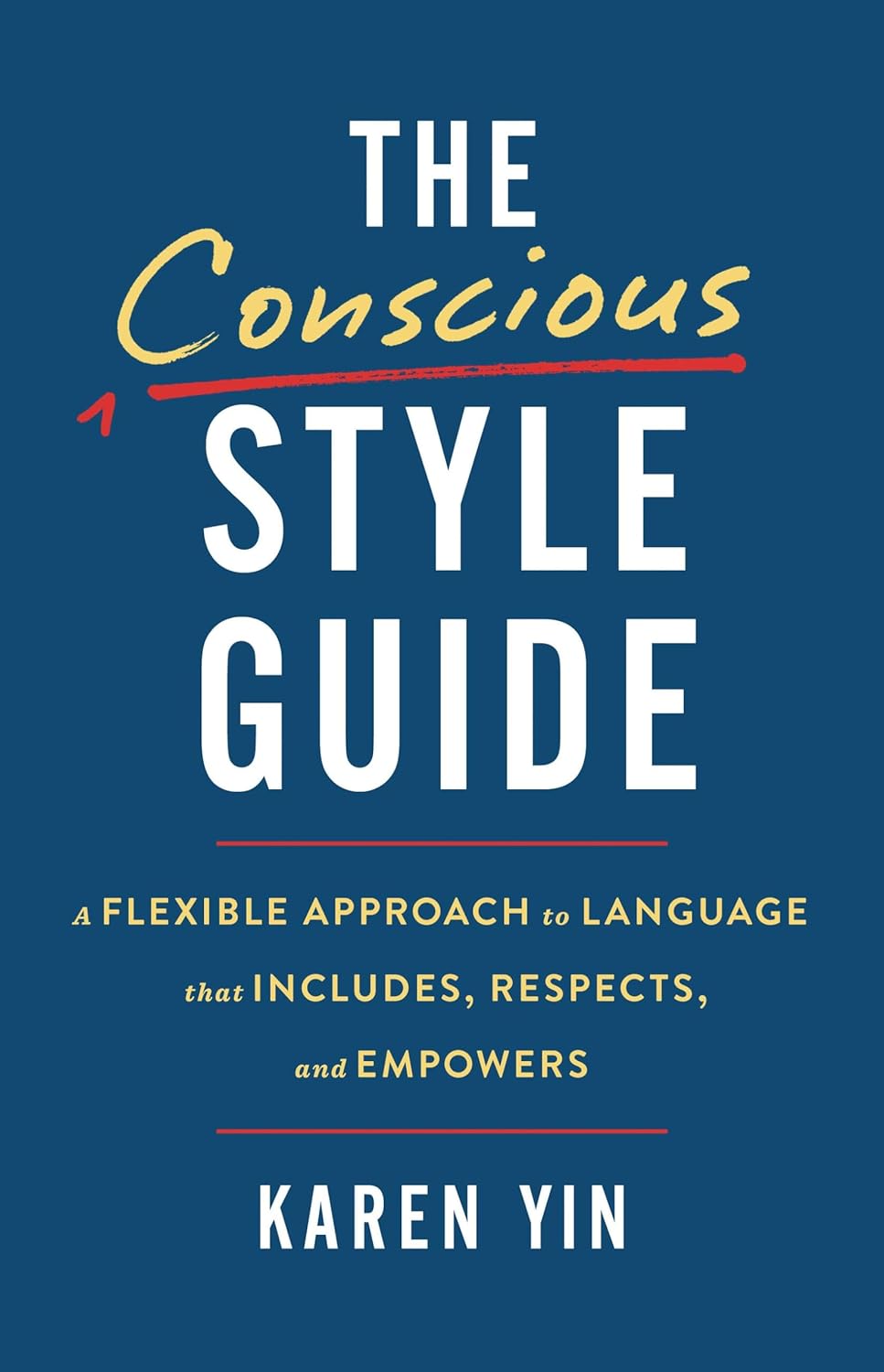
The Conscious Style Guide: A Flexible Approach to Language That Includes, Respects, and Empowers
Karen Yin
A must-have guide on choosing and using inclusive, respectful, and empowering language. This book provides in-depth information on navigating potentially problematic language, critically thinking through language choices, creating accessible content, and more.

BOOK
Writing an Identity Not Your Own: A Guide for Creative Writers
Alex Temblador
We are all unique individuals with specific (if often interconnected) identities. Writing from the perspective of someone unlike yourself can be challenging, but it's important to do it right. Though written with fiction writers in mind, this book is a handy resource for thinking through the complexities of intersectionality and biases.

Being true to oneself is not just a buzzword; it's a way of life that brings genuine connections and fulfillment. I remember a time when I struggled to fit into a work culture that just didn't resonate with me. It wasn’t until I embraced my true self—quirks and all—that I found a job where I could thrive and be happy. Authenticity matters because it allows us to live our lives fully and build deeper, more meaningful relationships. Thank you for highlighting this essential truth!