At a Glance:
Location: Global (including New York City, Washington, DC, Prague, and cities across Australia)
Entity: Independent, female-centric tour operators (including She Was Here, Prague Feminist Tours, and She Shapes History)
Systemic Problem: Severe underrepresentation of women in public historical statues (only 3%–9% across major cities) and stories, reinforcing female invisibility in urban landscapes
The Response: Walking tours that leverage unscripted urban spaces, creative archival research, and narrative storytelling to reclaim women’s history without relying on physical monuments
In the U.S. Capitol Building, there are approximately 260 sculptures and busts; of these, just 5% to 7% depict women. Pass by the hundreds of statues in Paris, and you’ll notice only 40 are of women. Across New York City’s five boroughs, there are about 150 public historical statues; when Statues for Equality installed 10 new sculptures on Women’s Equality Day in August 2019, female representation catapulted from 3% to 9% in a single day.
Different cities, same story: Depictions of men dominate the cityscapes that millions of people see and traverse through every day. It’s probably unsurprising, then, that they dominate the way people come to understand these urban landscapes as well, reinforcing a subtle global narrative of female invisibility. In cities across the world, a cohort of bootstrapped but determined female-centric tour operators are actively rewriting that story.
“There’s nothing to look at,” said Nikki Padilla, co-founder of She Was Here, a female-centric, women-owned tour company in New York City. “There are no monuments, there are no plaques, there’s nothing to look at and stand at, and that’s part of the point.” To combat this challenge, She Was Here tours last about two hours and profile seven or eight women. Guests use handheld placards to read descriptions of each featured woman within the context of the environment. Typical NYC tours are underpinned by names like John D. Rockefeller, Fiorello La Guardia, and Cornelius Vanderbilt, but lesser-known though no less important are women like Frances Perkins, an advocate for workers rights and the U.S. secretary of labor from 1933 to 1945. Even though there's no statue for Padilla’s guides to stop at when talking about Perkins, evidence of her contributions is everywhere, which means the route is fluid and can change. “I could stand in front of a building that has construction and be like, ‘New York City has all these workers, and they’re building every day,’” Padilla said. “That’s kind of the beauty of it.”
Launched earlier this year, She Was Here joins a handful of similar independent walking tours specifically highlighting women in Washington, DC, San Francisco, Paris, London, Prague, and in several cities throughout Australia. Even when there’s not much to look at, these tours offer a different lens through which travelers can “see” a city’s history, culture, and narrative. And even though the tours feature women and stories that have traditionally been oppressed and silenced, the vibe is anything but. “I try to keep the atmosphere friendly, engaging, and interactive,” said Averil Huck, founder of Prague Feminist Tours. “We talk about difficult parts of history, of course, but there is also a lot of courage, humor, friendship, creativity, and resistance. I want people to leave feeling curious, and maybe a little unable to see Prague in exactly the same way as before.”
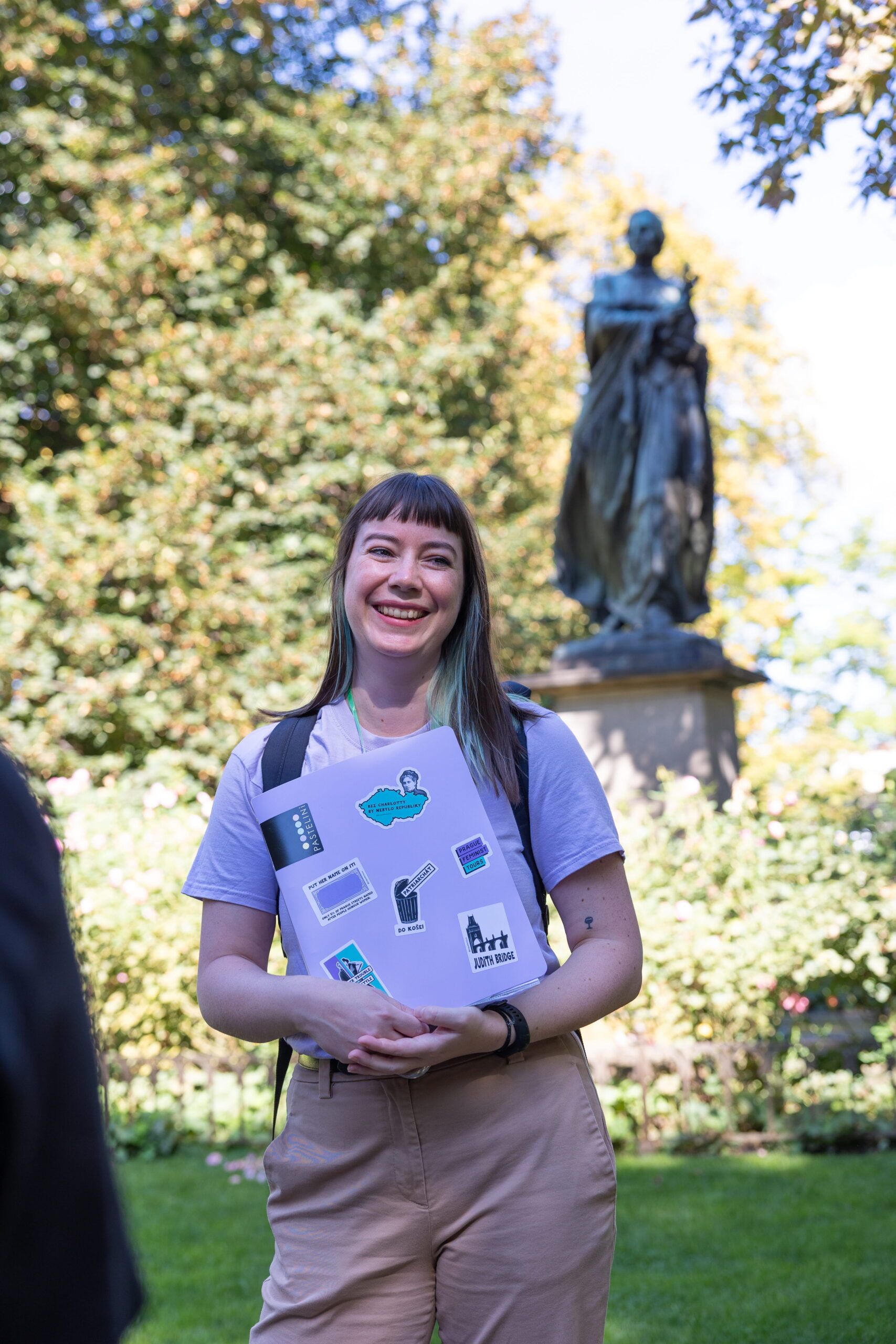
“I try to keep the atmosphere friendly, engaging, and interactive." - Averil Huck, founder of Prague Feminist Tours | Photo: Prague Feminist Tours
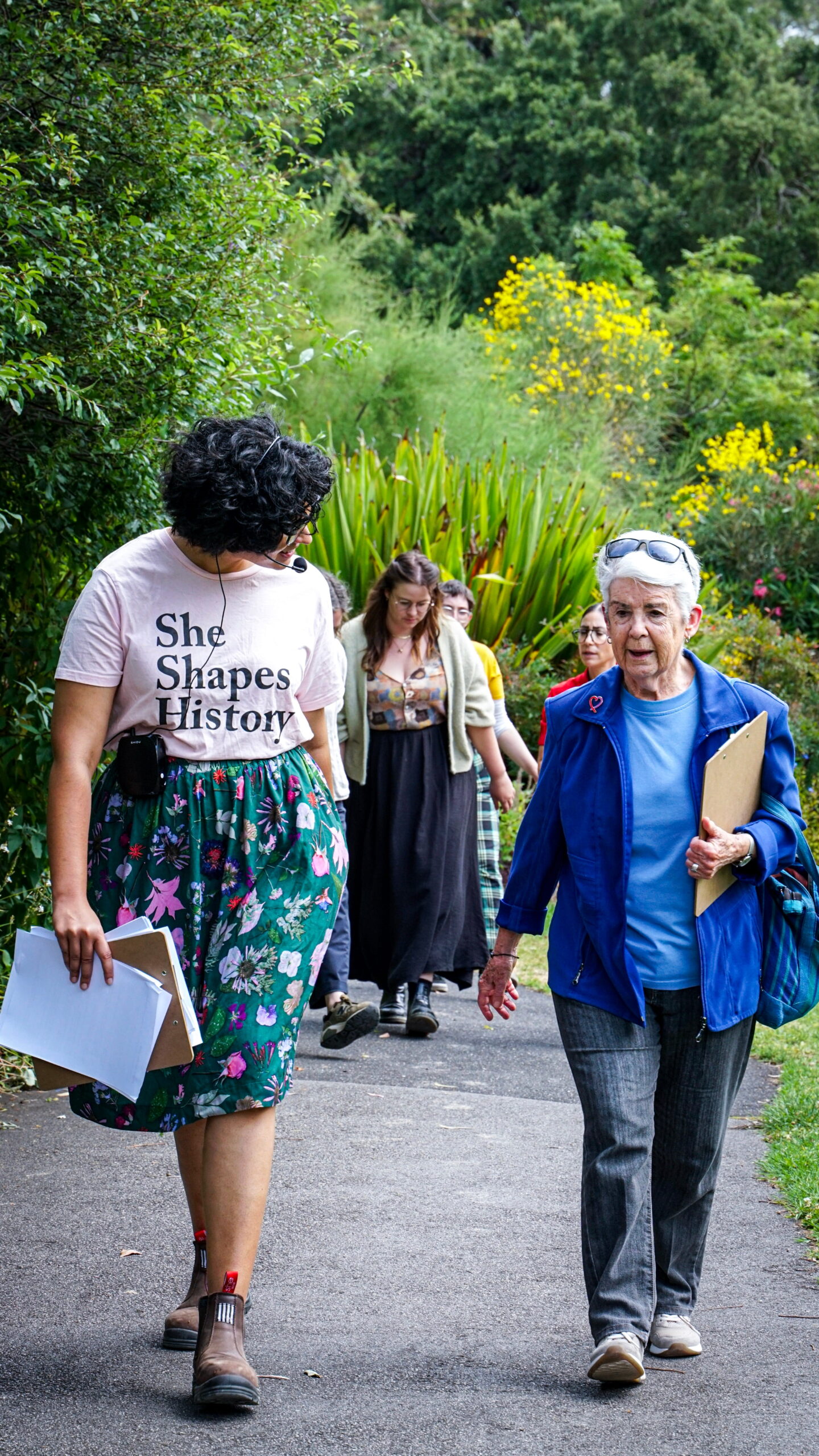
“I think the more people sharing women’s stories, the better." - Sita Sargeant, founder of She Shapes History | Photo: She Shapes History
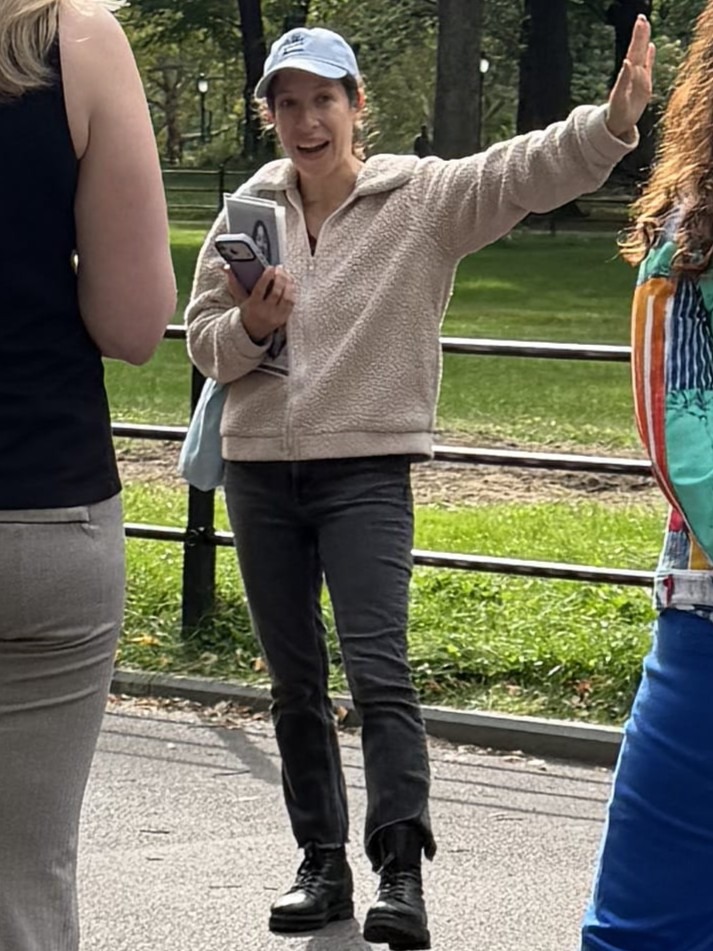
“There are no monuments, there are no plaques, there’s nothing to look at and stand at, and that’s part of the point.” - Nikki Padilla, co-founder of She Was Here | Photo: She Was Here
A sense of curiosity is one of the key motivators for these tour operators, many of whom were driven to action by their own unanswered questions combined with the need to fill a gaping knowledge gap at a critical point in time. Huck was learning about Czech feminism and women’s history through her work at the Czech Academy of Sciences but realized very little of this information was known or available in public spaces. After joining a feminist walk in France and not finding anything similar in Prague, she took the task on herself and now offers a main city center tour with a chronological thread as well as other thematic or location-specific tours as the opportunity arises.
Similarly, Sita Sargeant, founder of She Shapes History, which offers tours in four Australian cities, was working with a rich treasure trove of research about women’s contributions that average people couldn’t access when the #MeToo movement was hitting its peak throughout the country. “I was looking at the state of gender equity and going, ‘What can I do about this?’” she said. “I think I’m someone who’s very solutions-oriented, so I thought, you know, this is something that I can fix and work on.”
While Huck and Sargeant had access to some background knowledge, archival digging isn’t necessarily straightforward, and the tour designers often engage in creative research. They mine books and academic research, and sometimes they pull on threads through conversations and references they encounter through the course of their work. “They start coming out of the woodwork,” Padilla said. “Once you’re looking for it, there’s mention of this other woman, then mention of this other woman, and then you find this other book and you read this, and it just kind of snowballs.”
Women’s stories and contributions are often not as well documented as men’s and verifying information is difficult, but that also underpins the need and urgency for these female-centric tours. “I do the best with the information I have,” Padilla said. While she does her due diligence to determine the original source of any information as well as historical and cultural context, she doesn’t get tripped up in the details. “I’m very aware of the context, but my point is almost like it doesn’t matter,” she said. “We just need them to be talked about and then we can go in and debate: Was it this year or that year, did this actually happen or was it fabricated? To me, that is secondary, because if we wait for that to be confirmed, their stories will never be told.”
The lack of verified information and specific sites can make the operational planning of these tours more challenging than for traditional walking tours. Still, claiming space and holding these conversations in urban environments historically dominated by men carries immense weight. Their presence isn’t just about “adding women” into male-dominated spaces but changing how urban histories are understood and appreciated – something guides take pride in. “Our guides are very supported,” Sargeant said. “It’s something they really believe in and get a lot out of as well.” And, while mainstream tours might attract travelers who simply want to tick off the “must-see” sites, these tours tend to draw a self-selecting demographic that heavily skews female: mothers and daughters, bachelorette parties, and groups of girlfriends.
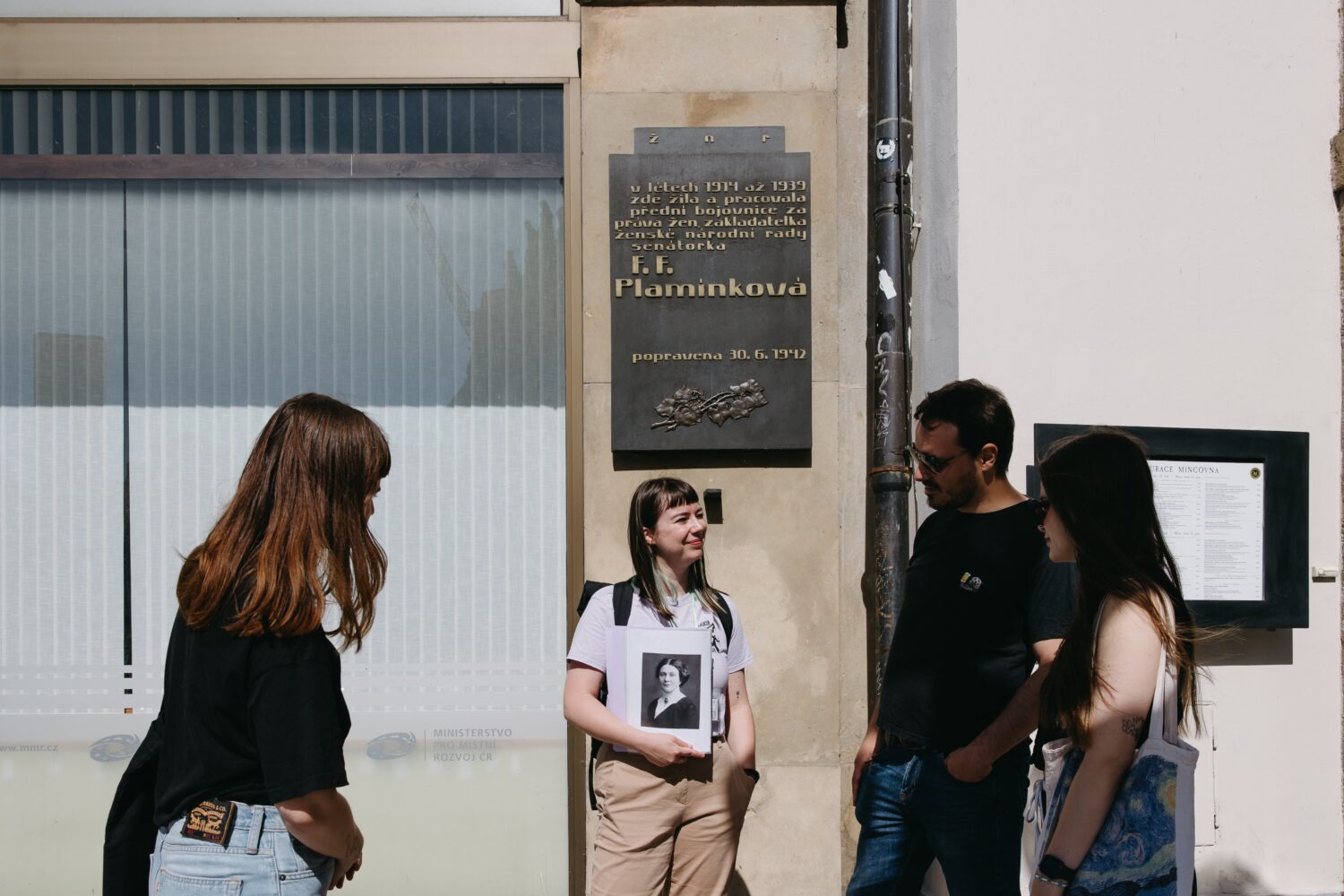
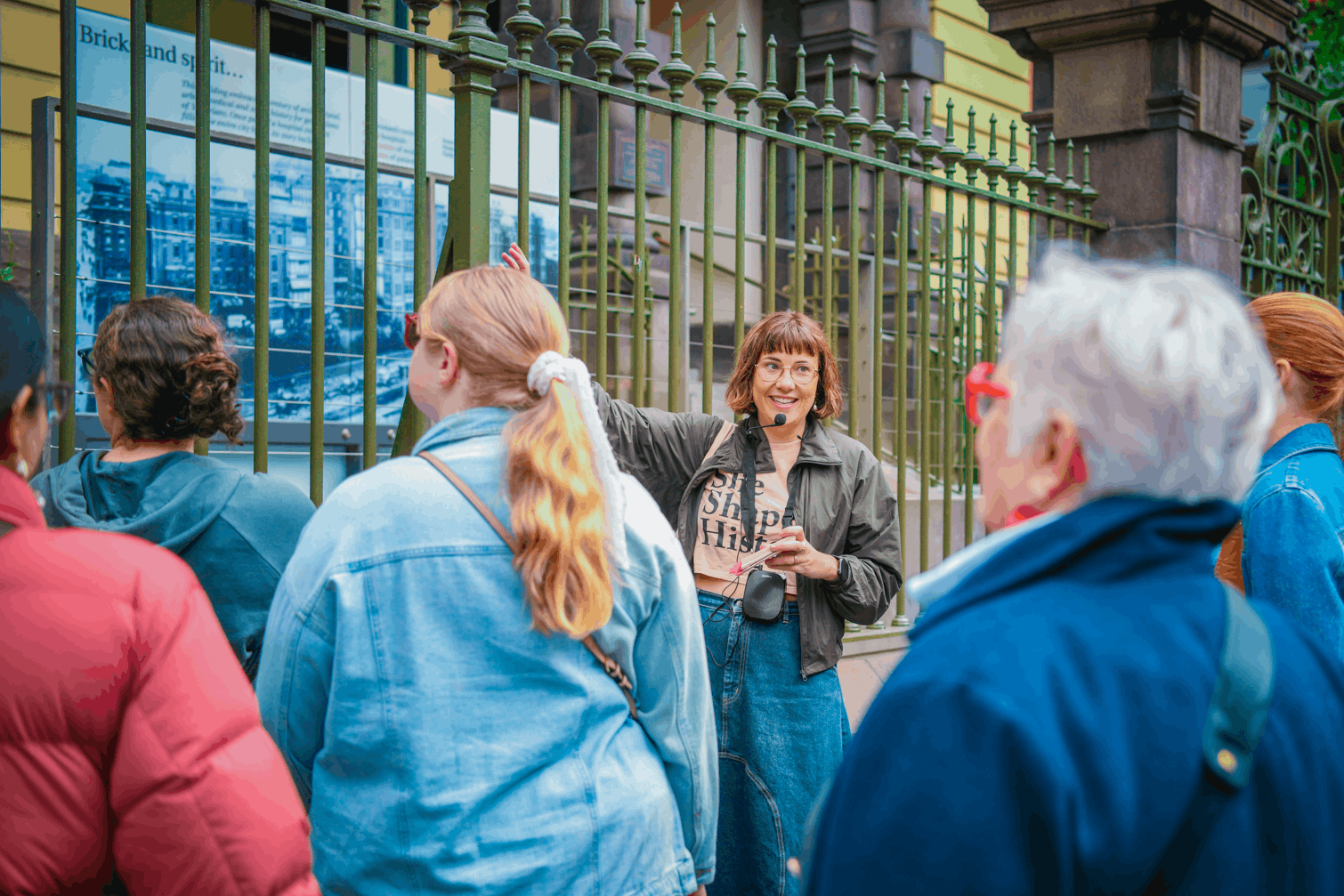
Women are grossly under-represented in public monuments, statues, and plaques, so guides on feminist-focused tours use creative storytelling and environmental cues to bring the lives of historic women to life. | Photo: Prague Feminist Tours
Men are welcome to join as well, and the majority that do are respectful and open to engaging thoughtfully in the experience. However, challenging the dominant narrative at a time when patriarchal and anti-feminist rhetoric is on the rise has also created friction within the tours’ contexts. A man who said he “learned about feminism” joined one of Huck’s recent tours, then proceeded to disrupt it: “Throughout the tour he kept interrupting with very broad questions and comments, and took up a lot of space in the group,” she said. And, earlier this year on a She Shapes History tour in Wollongong, a group of 20 to 30 teenage boys on e-bikes approached and harassed the tour group – an incident that required contacting the police and resulted in national news coverage.
These incidents are concerning, as public safety on walking tours is a top priority. Nonetheless, both Huck and Sargeant said situations like these are isolated, with the majority of negative interactions occurring on social media. Generally speaking, participants on these female-centric tours have responded enthusiastically and with overwhelmingly positive reviews, indicating tourists are interested in narrative-driven experiences beyond the bucket list. According to She Shapes History’s annual impact report released in June 2026, 49.5% of guests arriving on the tour rate their awareness of Australian women’s history at three or below out of 10. Twenty-nine percent of those who write a review describe, unprompted, a shift in how they see women’s history. “The tours have a very strong community vibe and are very empowering,” Sargeant said. “As a guide, you get this feeling that everyone there wants you to succeed, and they want to hear these stories.”
Positive customer feedback is the most immediate indicator of success for these operators, but the more lofty goals of raising awareness and changing public perception can be harder to measure, especially for small-scale, under-funded entrepreneurs. And yet, they persist: Though less than a year old, She Was Here is working with corporate groups. Both She Shapes History and A Tour Of Her Own, based in Washington, DC, offer free maps for people interested in self-guided experiences.
Further, She Shapes History, which operates on a slightly larger scale with five operational staff and 25 guides, has partnered with several local and national organizations while reaching nearly 11 million people through its social media content. According to its impact report, in the past year, the company researched and documented 137 women’s stories, which were shared across its tours, during public talks, and through partnerships.
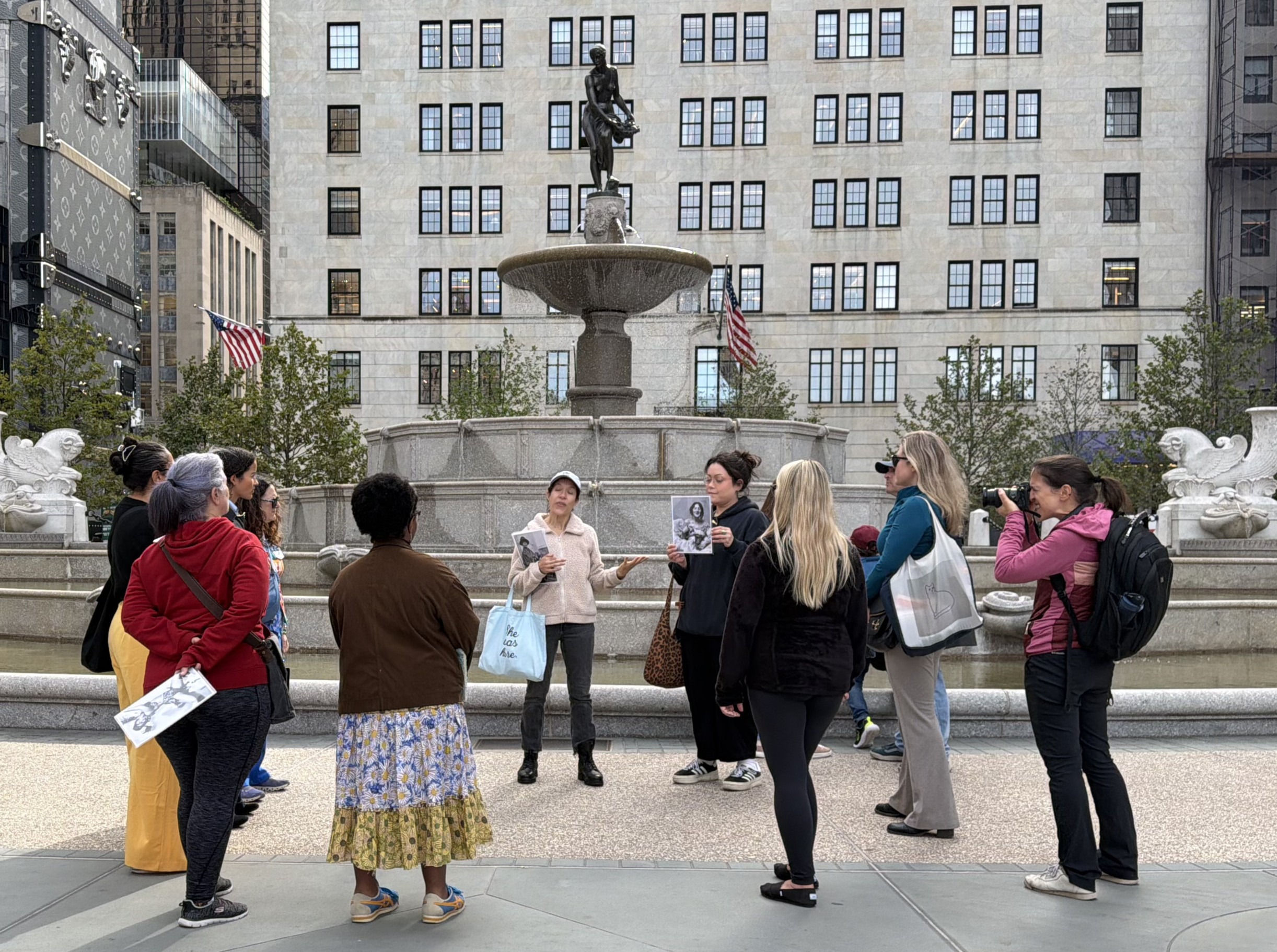
Uncovering verified information about the women featured on the urban tours can be challenging. Tour guides like She Was Here's Nikki Padilla argues that it's not precision that matters but getting the stories out into the world. | Photo: She Was Here
One of these partnerships, with Victoria University, brought academic women’s sporting history to life through a customized walking tour, illustrated self-guided map, and public storytelling campaign. This generated two guide jobs and brought in close to AUS$10,000 in revenue. Another partnership, with Australian fashion label made590 and illustrator Emma Rowland, resulted in a custom-designed print and colorful clothing collection celebrating women who changed and shaped Australian history.
These partnerships with community groups extend generously between the tour operators as well. She Was Here initially ran pop-up tours in NYC under the She Shapes History brand after Padilla and co-founder Beth Santos attended Sargeant’s tour in Australia. After Huck’s encounter with the overbearing male guest, she reached out to fellow feminist guides for advice and reassurance.
And now that they’re offering alternative urban experiences to those historically shaped around men, they’re not concerned about others encroaching on the space they’ve carved out through their research and work. “I think the more people sharing women’s stories, the better,” Sargeant said. “I think it would go against our whole mission if I didn’t want people to share these stories.”