I recently lived in Carthage, Tunisia, a town I called home for three years. This little corner of the world has played an outsized role throughout history, particularly throughout the reign of the Romans due to its strategic location as a port. In fact, UNESCO has declared the “archaeological site of Carthage” — literally our entire neighborhood — to be one of eight UNESCO-designated sites in Tunisia.
In theory, it’s a very cool place. However, when people ask about traveling to Tunisia, my answer tends to be that it might be a nice place to visit for a week, but I wouldn’t want to live there.
Allow me to explain: Over the last several years, there’s been an incredible investment in Tunisia’s tourism industry. Both GIZ and USAID launched multi-million-dollar projects designed to develop sustainable rural and adventure tourism in a move to shift some of the beach tourism to other parts of the country. (The USAID project, of course, ended abruptly in early 2025.)
Carthage doesn’t really fit into either the rural or adventure categories. Nonetheless, over the last year we lived in the area (2023-2024), we saw some changes in our neighborhood, namely signage pointing people toward the ruins, an informational placard at the tram station, and crosswalk stripes painted across several roads.
As residents, here’s what we also observed: Despite these improvements, there were still no garbage cans without holes in the bottom, and local residents continued to throw their rubbish everywhere, all the time. Cars drive too fast on neighborhood roads, and broken and/or a lack of sidewalks means there’s nowhere safe to walk or jog. Beaches are strewn with plastic bottles and glass. An overwhelming amount of street animals means we routinely witnessed sick and/or dead ones when we ventured out. There are no parks or public gathering spaces, so people get together in their home compounds or sit in their parked cars. And the exit fee for a resident (but not a visitor) remained fixed at 60 Tunisian dinars during the three years we lived in the country, even as the cost of living and unemployment increased.
These observations are things most people can look beyond over the course of a short holiday. They are possibly inconveniences or maybe “quirks” of a place that’s got “character.” (Some of these things, like the resident exit stamps, are entirely unknown by visitors.) But for me, they became features of a place I did not enjoy calling home. Living in Carthage didn’t feel comfortable or safe. There weren't any places to socialize or relax. And the people who lived in and moved around my neighborhood didn’t really seem to care.
I am thrilled there has been investment in Tunisia’s tourism sector. But I am greatly disappointed in what I perceive to be a lack of funding and effort to create an appealing place to live. And I’m not the only one: Conversations with locals and expats anecdotally reveal that young, upwardly mobile, middle class, and entrepreneurial people are leaving (or planning to leave) Tunisia for places that are more interesting, family-oriented, affordable, creative, safe, and clean.
As someone immersed in a holistic approach to tourism, this disconnection between tourism investment and quality of life for local residents was obvious and unfortunate. It serves as an example of how placemaking has failed even as tourism has slowly but steadily increased despite setbacks. It is also an example of why place attachment matters, and why acknowledging the challenges and needs of local residents in the tourism context is important.
What is Place Attachment and Why Does It Matter?
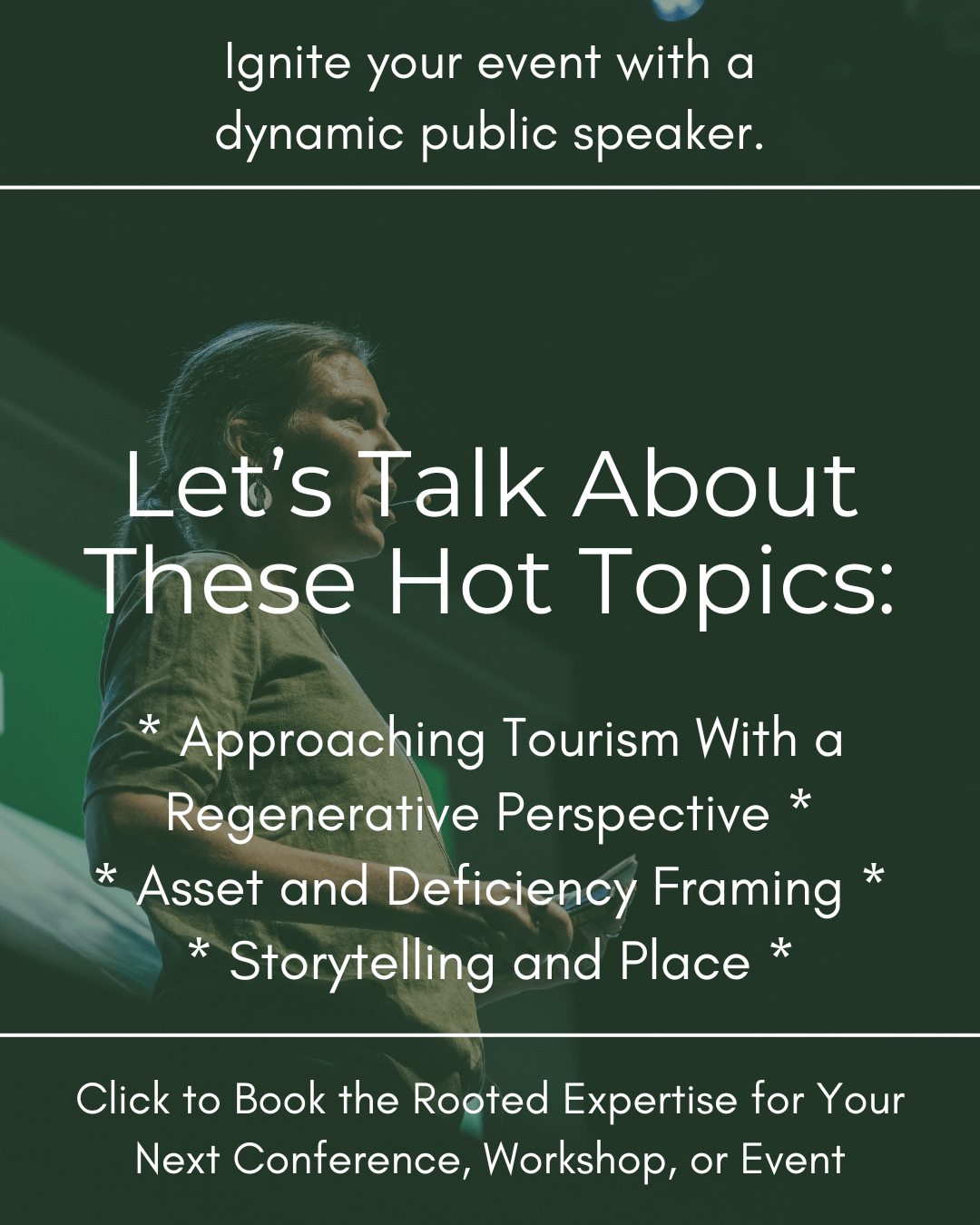
Place attachment is the emotional bond between a person and a specific place — essentially the relationship between people and their surroundings that evolves through connection and meaning. It is a concept generally considered in the context of urban development and design, especially related to green spaces and places where people gather. Research has found that attachment to green places, in particular, can encourage individuals to proactively care for these spaces.
In the tourism context, we often say that people are at the heart of a place (a “destination”). If local residents don’t feel a connection to the place they call home — if they don’t care for it and don’t take pride in it — this has a negative impact on tourism. Why?
- Only the people living locally can know what mutually beneficial and meaningful tourism looks like in their community.
- A great place to visit should first be a great place to live.
- If tourism is mutually beneficial and locals love where they live, they are natural ambassadors providing word-of-mouth marketing for the places they call home.
The Bridge Between Placemaking and Connection
Central to place attachment is the concept of placemaking. This is the hands-on, intentional, and collaborative process of creating and improving places (neighborhoods, cities, regions, etc.) that maximize shared value. As noted by the Project for Public Spaces, “With community-based participation at its center, an effective placemaking process capitalizes on a local community's assets, inspiration, and potential, and it results in the creation of quality public spaces that contribute to people's health, happiness, and well being.”
I don’t know about you, but I think that sounds like a beautiful vision for a place where I want to live and that I want to visit.
At the heart of placemaking is shared social spaces that foster opportunities for conversation, community, cooperation, and connection. These spaces should be safe, inclusive, and welcoming for a diversity of people. They include places like:
- Streets closed off to traffic and prioritized for pedestrians.
- Squares and parks that are multi-use destinations.
- Open-air market spaces.
- Playgrounds with seating and gathering spaces for adults to socialize.
- Pass-through spaces that connect buildings.
- Wide sidewalks with landscaping and safety barriers.
- “Third places” (spaces beyond home and the workplace), including cafes, gyms, public libraries, social clubs, and similar places where people gather around a common interest.
Placemaking is largely focused on the physical quality of spaces, but holistic considerations are important as well. Local residents need access to affordable housing, healthcare services, education, and reliable transportation. If social gathering spaces are created with intention, they can become powerful places for people to meet their neighbors and find commonality with others they might not encounter within segmented spaces like workplaces. They also become spaces where people engage in conversation about civic issues and develop a shared vision for the place they call home.
Placemaking and Its Connection to Tourism
All of this might seem quite far removed when viewed through a tourism lens. After all, access to healthcare services and keeping the public library doors open are a far cry from a DMO’s purview of destination marketing and place branding. In fact, there is a distinct tendency to silo local residents’ needs, challenges, desires, and potential while developing and promoting tourism within the very places people call home.
And yet, simultaneously — and egregiously — the tourism industry often touts local people as a destination’s greatest assets. This essentially commodifies their presence without acknowledging their holistic personhood.
Instead of thinking of local residents as representatives of a place, try stepping into their shoes and simply think of people … as people. If you live somewhere that is attractive to tourists, you may know what it’s like for your home to be treated like someone else’s playground. It can be helpful to remember that, for the most part, people everywhere have the same basic needs and desires — to feel loved and safe, to be able to provide for their families, etc. — and they face similar challenges related to job security, the environment, and affordable housing.
In recent years, travel-related news has largely magnified efforts by local residents speaking out against overtourism and its negative impacts on the spaces they inhabit on a daily basis. In many cases, people aren’t actually anti-tourist; they are anti-bad management of tourism. There are real benefits of well-managed tourism, including improving the quality of life for residents, but this only happens with intention.
This is where the connection between placemaking and tourism happens.
This is a multi-dimensional connection: Including local people in conversations about the quality of life in their own communities and how tourism can exist and be used to support their day-to-day needs provides agency to the very people who embody the historical, cultural, and social context of a place. When locals know and can interact with each other in accessible, safe spaces, they are happier, healthier, more connected, and more invested in hosting guests who are also primed to be more caring and connected.
Tourism has the potential to support placemaking initiatives and travelers benefit from them, but only if these initiatives are given the attention they need and deserve from local governments, advocacy groups, and the private sector as well as city and regional DMOs, tourism boards, and other travel-related businesses.
How to Include Locals in Tourism Conversations and Planning
To summarize: When local residents have place attachment, they are connected to and invested in caring for a community ecosystem that is safe, inclusive, and attractive. To help foster place attachment, communities should center placemaking, which creates physical spaces conducive for conversation and connection. Placemaking also supports opportunities for holistic care so people can maximize their presence in community spaces.
These kinds of spaces (open-air markets, pedestrian-friendly walkways, parks, third places, etc.) are also attractive to travelers, who also seek out accessible, safe, and welcoming ways to move through and enjoy destinations. Additionally, good placemaking also creates the conditions for tourists to connect with local residents in a frictionless, shared environment.
This all sounds good on paper, but how can communities help locals care about places as destinations for tourists? And, how can locals be included in conversations about tourism? Keeping in mind that every place is uniquely different, these two examples offer insight into how others are navigating these questions:
Furneaux Futures Folds Tourism Into Regenerative-Focused Community Conversations
The Flinders Island community connects at the Furneaux Futures Forum to discuss the issues and opportunities inherent in island life. This is a place where local talent comes together to discuss how the community can collaboratively use creativity to foster economic resilience, support sustainable development, and thrive.
The workshops, training sessions, and networking events are grounded in placemaking and ensure that local residents’ concerns, ideas, and challenges are heard and acknowledged. The forum attracts a diverse group of individuals interested in and committed to building a regenerative future for the entire community, including entrepreneurs, small business owners, community leaders, and state government representatives spanning a cross-section of social, cultural, economic, and environmental areas.
According to the Furneaux Futures website, the 2023 event “served as a collaborative hub where innovative ideas could flourish, promoting local products and services, enhancing the visibility of island businesses, and sharing community-led, community driven initiatives.” The word “tourism” isn’t present in materials about the event, yet it is a deep placemaking initiative that naturally acknowledges tourism as a part of the community fabric.
Tourism Industry Association of the Yukon Looks Beyond Thriving Travel Businesses
At its 2025 annual tourism event, the Tourism Industry Association of the Yukon broke from the prescriptive conference mold by veering away from standalone sessions and typical success measures. Rather, the event’s intention was to “explore how hosting — in the broadest sense — shapes community resilience, well-being, and our shared future.” It acknowledged tourism as something beyond visitors coming and going within the place and, rather, includes “the way we welcome, nourish, and sustain each other, our land, and new possibilities.”
Often, when people working in tourism gather, they remain isolated within their sphere of work. Occasionally, “local voices” are invited into the room, but there isn’t deep work being done for people working in tourism and those beyond to come together to discuss the creative and collaborative potential of responding to issues unique to a specific place.
An event like this one acknowledges that “regenerative tourism” is about so much more than tourism. It embraces a holistic perspective in which tourism has the capacity to have “more benefit for more of the system,” as noted by Michelle Holliday in her summary of the event. This approach — coming initially from a tourism angle — widens the scope of “destination” by considering the entire “hosting ecology” of a place.
Using Tourism to Address the Rise of Individualism
Discussing placemaking in an era of increased divisiveness can feel futile — but that’s also why it is essential to prioritize it and for tourism to play a role in developing and supporting placemaking initiatives.
Insofar as tourism is a gateway to personal transformation, breaking down barriers between people, introducing new and surprising ways of thinking, and offering opportunities to connect with nature, then the industry is also in a powerful position to address the rise of individualism. This unlocks that golden opportunity of “building bridges” and using tourism to “foster peace and understanding” through connection with strangers.
Here are a few ideas for creating opportunities for tourists to strengthen a sense of togetherness while supporting a sustainable, regenerative community fabric — one in which a communities’ residents are resilient and empowered to live fulfilled lives:
Endorse Community Homestays
People’s homes are among the most intimate spaces we inhabit. Homestays (spending the night in someone’s home) are an invitation for travelers to enter into that personal space and be part of those everyday routines that make us who we are.
There is often a bit of uncertainty around homestays. However, after both parties get over that initial bout of awkwardness, the organic conversations and activities that arise from these experiences are often those that travelers remember most. Nothing breaks down barriers faster than experiencing just how similar we all are … despite the different ways we live.
Integrate Active Learning Into Travel Experiences
From replanting coral reefs to cooking meals, active learning in a tourism context can help turn passive travelers into more engaged global citizens. As its name implies, active learning requires people to learn from others while also participating in an activity.
Not only are these travel experiences fun and interesting, but active learning has also been shown to enhance the development of creative thinking, adaptability, communication, and interpersonal skills. It also requires giving up a bit of control and trusting in others — a tangential benefit on the road to revitalizing a community.
Create Common Gathering Spaces
Hostels have made budget travel possible for a lot of people, and they’ve also excelled in creating gathering spaces. Most hostels have communal kitchens and lounges where people hang out and get to know each other. It seems that, as people pay more for accommodations, they’re also paying to stay in their own isolated bubbles.
Accommodations that create inviting communal spaces with cozy seating, tables, group-friendly activities like games, and even light refreshments create the conditions for people to break out of those bubbles.
Encourage Family-Style Seating or Dining at Meals
Why have we let family-style dining go the way of the dinosaur? Sharing food — or conversation over food, or at least the table at which we eat — is a natural icebreaker.
I’ve been to a handful of restaurants over the years where people share long tables with strangers, and it’s never been a hostile experience. Occasionally, they’ve even resulted in friendly conversations. We can encourage these kinds of interactions in dining establishments throughout the world. Similarly, on tours where family dining is the norm, encourage people to sit with different folks at each meal.
Invite Visitors to Participate in Agritourism Activities
So many people sit down to a meal without any idea where their food came from. Food waste is a huge problem in tourism, but it is also an opportunity to help people connect with food through tourism. Food doesn’t just magically appear, so if possible, give travelers a chance to learn about the path food takes to reach their plate.
Agritourism experiences (whether planting seeds, harvesting vegetables, or crushing wine grapes) encourage travelers to interact with farmers (who naturally have place attachment) and appreciate the land from which their food comes. It’s a win-win scenario.
Are you ready to take action?
Start with these resources.
Resources Beyond Rooted
Future's Happening: A Nonpartisan Playbook for Sparking Civic Imagination and Creative Possibility
d. school at Stanford University